
Is Turkey truly part of the Middle East, or something far more complex? Discover the geography, culture, and identity that shape modern Turkey with EVBodrum and EVTurkey.com.
A Question That Reveals More Than It Asks
Few questions about Turkey spark as much debate as this one:
Is Turkey part of the Middle East?
At first, it seems geographic. Yet, behind it lies a deeper curiosity — about identity, belonging, and perception.
Because Turkey is not easily defined by borders or clichés.
It is where continents, cultures, and histories overlap — a land that has seen empires rise and philosophies converge.
And perhaps that’s precisely what makes Turkey so intriguing to the world:
It is not either–or. It is both–and.
At EVTurkey.com, the lifestyle and insight platform powered by EVBodrum, we explore these intersections — where geography meets culture, and where the modern meets the timeless.
1. Geography: The Bridge That Defies Boundaries
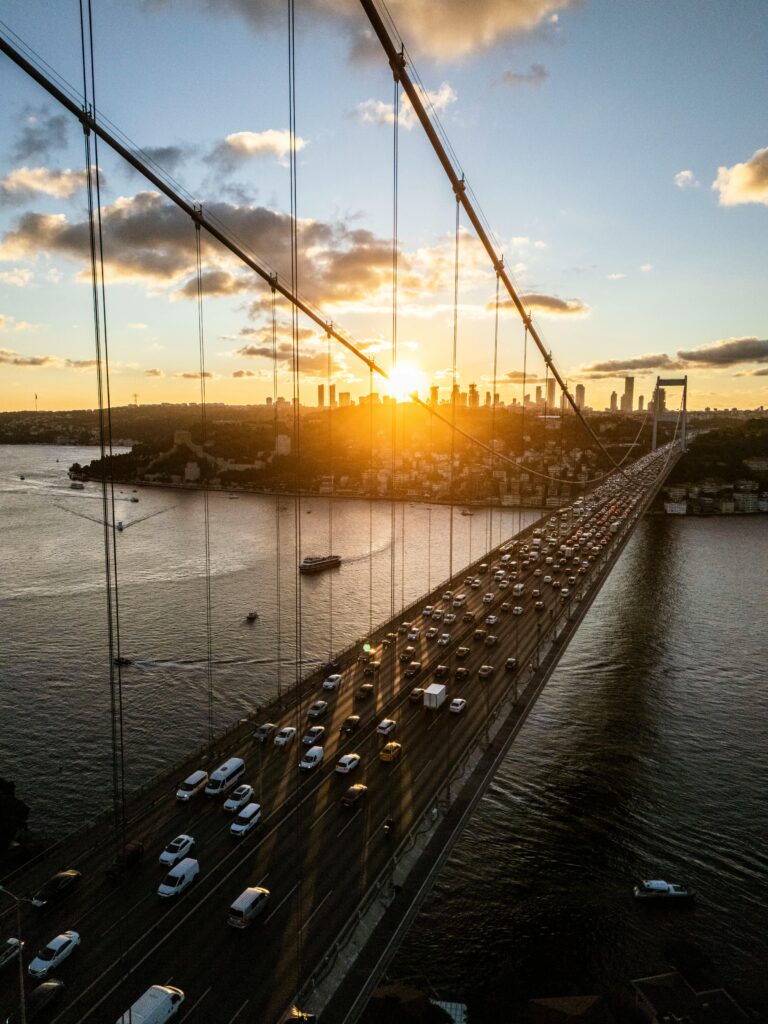
On a map, Turkey is both European and Asian.
Roughly 97% of its landmass lies in Asia — specifically in the region known as Anatolia — while the remaining 3%, Thrace, belongs to continental Europe.
The two sides are divided by the Bosphorus Strait, the Sea of Marmara, and the Dardanelles — ancient waterways that have carried trade, armies, and ideas for millennia.
Yet, geography alone does not define identity.
If that were true, Turkey would belong to two continents, three regions, and countless narratives.
What truly distinguishes Turkey is how it embraces complexity instead of simplifying it.
From Istanbul’s skyline, where Ottoman domes and modern towers coexist, to Cappadocia’s valleys, shaped by both volcanoes and civilizations — the land itself tells a story of union, not division.
2. History: Where Empires Once Converged
To understand why Turkey cannot be boxed into a single regional label, we must look at its history — one of the richest in human civilization.
This is the land of Troy and Byzantium, Rome and the Ottomans, and now, the Republic of Turkey.
Each era left a distinct layer of culture, religion, and governance.
- The Byzantine Empire connected Anatolia to the Christian world of Europe.
- The Ottoman Empire, for nearly 600 years, stretched across three continents — ruling the Balkans, the Arab world, and North Africa alike.
- The Republic, founded in 1923 by Mustafa Kemal Atatürk, redefined the nation around modernity, secularism, and self-determination.
Turkey’s unique position isn’t a coincidence — it is the result of centuries of being a bridge.
No other country has played such a continuous role in connecting East and West, tradition and reform, faith and reason.
3. Culturally: A Mosaic Rather Than a Monolith
Culture in Turkey cannot be reduced to one origin story.
Step into a Turkish home and you’ll taste Mediterranean olive oil beside Middle Eastern spices; hear Balkan rhythms echo in Anatolian folk music; and see Persian calligraphy beside modern design.
This coexistence is not confusion — it’s harmony.
It reflects Turkey’s long history of trade, migration, and openness.
Cities like Istanbul, Izmir, and Gaziantep illustrate this blend perfectly:
- Istanbul thrives as a global crossroads, with neighborhoods that could be in Paris, Beirut, or Tokyo — depending on the street you turn down.
- Izmir carries a distinctly Aegean identity — relaxed, creative, and deeply Mediterranean.
- Gaziantep, often called the “gastronomic capital,” anchors Turkey’s connection to Levantine and Arab influences.
This diversity is precisely what EVBodrum’s clients and EVTurkey’s readers value most about Turkey — that it contains many worlds within one border.
4. The Western Gaze and the “Middle East” Label
So why do people still ask whether Turkey is part of the Middle East?
The answer lies not in Turkey, but in how the West historically defined regions.
The term “Middle East” itself was coined by British strategists in the 19th century to describe lands between India and Europe — a colonial shorthand rather than a cultural reality.
Over time, it became an umbrella term for countries from Egypt to Iran, unified less by geography than by Western perception.
Turkey’s inclusion in or exclusion from that group has always been a matter of convenience:
- During the Cold War, Turkey was a NATO ally, framed as the West’s bridge to the East.
- In global media, it sometimes appears under “Middle East” headlines due to shared religion or proximity to Arab countries.
- In trade and diplomacy, it’s often aligned with Europe through the EU Customs Union, aviation partnerships, and tourism networks.
In truth, Turkey has never fully belonged to any category — and that’s its advantage.
It’s a hybrid nation, fluent in both Western institutions and Eastern sensibilities.
5. Modern Turkey: A New Center, Not a Periphery
Today’s Turkey is not standing between worlds — it’s building one of its own.
Its cities pulse with confidence and creativity:
- Istanbul remains a financial and cultural powerhouse.
- Ankara, the capital, anchors governance and education.
- Izmir and Antalya lead in sustainable development and coastal living.
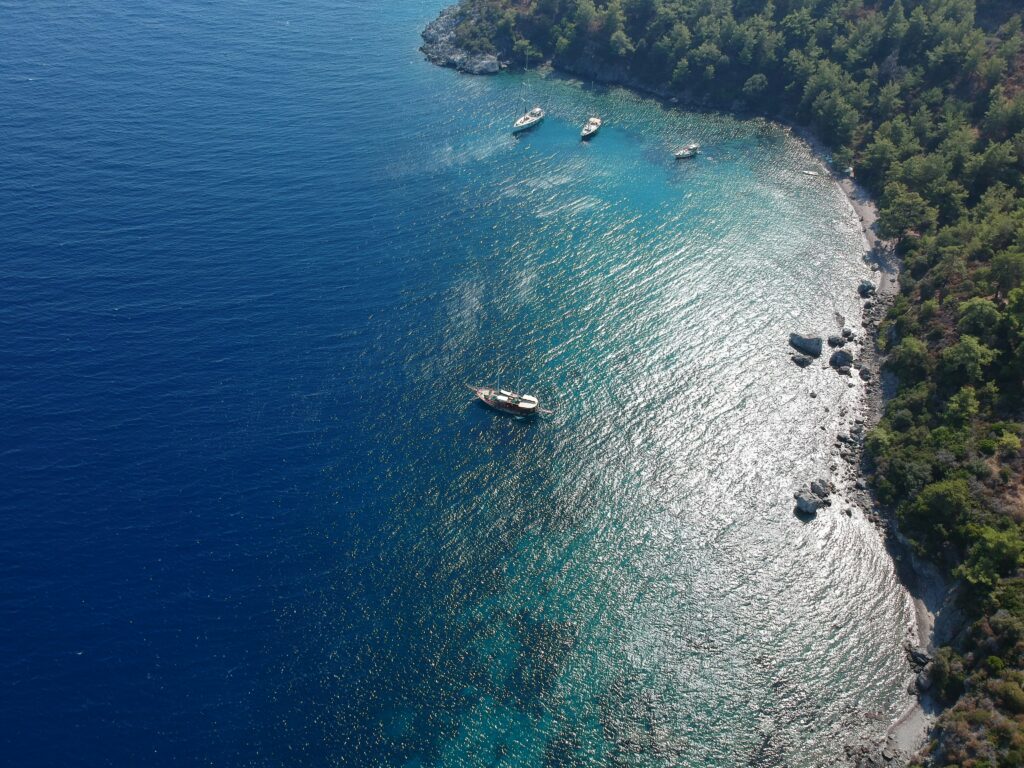
- Bodrum defines Mediterranean elegance, where EVBodrum itself curates a portfolio of properties designed for slow luxury and global living.
Across every region, Turkey is less interested in belonging and more focused on leading — economically, culturally, and diplomatically.
The result is a country that embodies globalization not as imitation, but as integration.
6. Religion and Secularism: A Unique Balance
Religion often colors how outsiders perceive the Middle East — yet Turkey’s relationship with faith is distinct.
While the majority of Turks are Muslim, the Republic’s founding principles established a secular state — separating religion from governance while allowing personal faith to flourish.
This creates a national ethos that is both spiritually grounded and institutionally modern.
Mosques and modern art museums coexist; religious holidays and national celebrations intertwine.
For expatriates and investors seeking stability, this balance offers comfort — a rare blend of cultural depth and civic freedom that few nations in the region can match.
7. Language, Lifestyle, and Mindset
If geography and history make Turkey unique, its mindset cements that identity.
The Turkish people are proud, pragmatic, and forward-looking.
They honor tradition — but they adapt swiftly to innovation.
In real estate, this is visible in the fusion of design:
stone villas inspired by Aegean architecture now feature solar panels, smart systems, and minimalist interiors.
In daily life, generations share space comfortably — from family lunches to digital startups.
This is the Turkey that EVBodrum and EVTurkey.com celebrate:
A nation that grows without losing its soul.
8. Economically: A Hub, Not a Hinterland
Turkey’s economy further reinforces its hybrid identity.
As one of the world’s 20 largest economies, it acts as both a European production base and a Middle Eastern logistics hub.
Its exports reach 200 countries, its airlines connect continents, and its property market remains among the most dynamic globally.
From luxury coastal villas in Bodrum and Antalya to urban investments in Istanbul and Izmir, Turkey has become a magnet for global capital and lifestyle migration.
Through EVBodrum’s real estate expertise and EVTurkey’s editorial lens, the story is clear:
Turkey’s future is not defined by where it is located, but by what it creates.
9. Cultural Diplomacy and Global Perception
Turkey’s soft power extends far beyond its borders.
Its cuisine, series, music, and tourism industry all project an image of modern hospitality rooted in heritage.
Turkish dramas dominate streaming platforms from Latin America to the Gulf.
Chefs reinterpret Anatolian cuisine in Michelin-starred restaurants from London to Dubai.
Cultural institutes promote Turkish art, literature, and design across Europe and Asia.
This outward confidence subtly shifts the question from “Is Turkey part of the Middle East?” to “What new region is Turkey creating for itself?”
One that transcends borders, languages, and stereotypes.
10. A Country That Redefines Categories
So, is Turkey part of the Middle East?
The most honest answer is: partly — but never entirely.
It belongs to the Mediterranean in climate and cuisine, to Europe in institutions and economy, to the Middle East in geography and faith, and yet remains distinctively itself.
Turkey does not fit within a mapmaker’s frame because it was never meant to.
It was meant to be a meeting point — a living bridge, constantly renewed by those who cross it.
As EVTurkey.com often notes, Turkey is not a borderland; it’s a centerland — a country whose diversity gives it strength, and whose future lies not in choosing sides, but in connecting them.
11. For the Curious, the Investors, and the Dreamers
Whether you are an investor, traveler, or simply curious about Turkey’s identity, the key is to see it as it truly is — layered, resilient, and self-defined.
From Bodrum’s sunlit marinas to Ankara’s modern skyline, the nation speaks in many dialects of modernity.
At EVBodrum, we translate that complexity into opportunity — guiding clients through the evolving real-estate landscape with integrity and insight.
At EVTurkey.com, we translate it into stories — exploring how Turkey lives, works, and creates in the 21st century.
Together, we invite you to see Turkey not as a region, but as a revelation.
Conclusion: Beyond the Question
In the end, asking whether Turkey is part of the Middle East misses the point.
The more meaningful question is what Turkey teaches us about the possibility of coexistence — of being many things at once without contradiction.
Here, East and West are not opposites but partners.
And in that balance, Turkey has found its true geography: not on the map, but in the imagination of the world.