From Paris to Tokyo, discover ten patisseries that have transformed pastry-making into pure art — where flavor, craft, and imagination meet perfection.
1. The Pastry as a Mirror of Culture
Pastry is more than dessert.
It’s a story of precision and pleasure — where butter and sugar become poetry, where a single bite can evoke centuries of craftsmanship.
Around the world, certain patisseries have transcended the idea of a “bakery” to become temples of taste.
These are the places where recipes are written with emotion, where chefs create symphonies from cream and flour, and where design and flavor merge into art.
This is not just a list of the best — it’s a celebration of the global language of pastry.
2. Pierre Hermé – Paris, France
The Alchemist of Flavor
If pastry were fashion, Pierre Hermé would be haute couture.
Once called “the Picasso of pastry,” Hermé redefined French patisserie by turning tradition into innovation. His legendary Ispahan — rose, lychee, and raspberry — became an icon of modern gastronomy.
Inside his boutiques, the atmosphere feels more like a gallery than a shop.
Macarons are presented like jewels; chocolate glistens in minimalist glass cases. Every creation carries his signature balance — delicate, architectural, yet emotionally resonant.
Pierre Hermé didn’t just preserve French pastry heritage — he transformed it into a global language of taste.
3. Dominique Ansel Bakery – New York, USA
The Birthplace of the Cronut Revolution
When Dominique Ansel unveiled the Cronut in 2013 — a hybrid between a croissant and a doughnut — he didn’t just invent a pastry; he created a movement.
Crowds lined up before dawn in SoHo, and within hours, his invention became a worldwide phenomenon.
But beyond the viral fame, what defines Ansel’s bakery is its playful genius.
His creations — the Frozen S’more, the Cookie Shot, the Blossoming Hot Chocolate — merge nostalgia with innovation. Each dessert invites not just indulgence but interaction, making eating itself an experience.
It’s a reminder that joy and creativity can coexist inside a single, flaky layer.
4. Sadaharu Aoki – Tokyo, Japan
Where Matcha Meets Macaron
At Sadaharu Aoki’s Tokyo atelier, precision feels like meditation.
Trained in France, Aoki brought Parisian techniques home and infused them with Japanese philosophy and ingredients: matcha, yuzu, black sesame, and kinako.
The result is harmony on a plate — a dialogue between restraint and richness.
His matcha mille-feuille and black sesame éclairs are not only delicious but visually minimalist, echoing Japan’s reverence for form and balance.
Aoki’s work proves that the best patisserie doesn’t imitate; it interprets — turning cross-cultural exchange into edible art.
5. Ladurée – Paris, France
The Timeless Salon of Sweet Elegance
No name is more synonymous with French luxury than Ladurée.
Since 1862, its pastel boxes and delicate macarons have symbolized Parisian refinement. But its magic lies in the experience: walking into a Ladurée salon feels like stepping into the Belle Époque — gilded mirrors, soft velvet, and the scent of almonds and vanilla in the air.
Beyond the macarons, Ladurée represents continuity — proof that elegance never goes out of style.
Every detail, from the mint-green packaging to the gilded teaspoons, tells a story of craftsmanship passed down through generations.
In an age of innovation, Ladurée remains a masterpiece of consistency.
6. B. Patisserie – San Francisco, USA
The Modern Soul of French Pastry
Belinda Leong’s B. Patisserie is where California sunlight meets Parisian skill.
Her kouign-amann — a caramelized Breton pastry that’s crisp outside and tender within — is often hailed as one of the best in the world.
But the true charm of Leong’s bakery is its approachable elegance.
The open kitchen, the scent of butter, the minimalist design — it all feels effortless yet precise. Every croissant, tart, or financier carries the warmth of craftsmanship without the intimidation of formality.
This is French pastry for the modern era: less pomp, more soul.
7. Gerbeaud – Budapest, Hungary
Where History and Indulgence Meet
Step into Gerbeaud Café, and you step back in time.
Founded in 1858, this Budapest institution is all marble tables, gilded mirrors, and chandeliers — a remnant of Austro-Hungarian grandeur. But what endures are its iconic desserts: the Gerbeaud slice with walnuts and apricot jam, and the layered Dobos Torte, capped with glossy caramel.
Gerbeaud is not a patisserie; it’s a living archive of European dessert culture — proof that tradition, when made with integrity, never grows old.
8. Cova – Milan, Italy
The Milanese Temple of Refinement
Established in 1817, Cova is older than Italy itself — and still one of its most elegant institutions.
Its glass cases gleam with panettone, cannoli, and delicate mignon pastries, all served with the grace of a Milanese opera.
Cova’s secret lies not in innovation but in ritual. Locals linger for hours over espresso and tiramisu, surrounded by marble counters and chandeliers that have witnessed centuries of style.
It’s a reminder that in Italy, sweetness isn’t rushed — it’s performed.
9. Pierre Marcolini – Brussels, Belgium
The Sculptor of Chocolate Dreams
Pierre Marcolini approaches pastry like an artist approaches sculpture.
Known for his exquisite chocolates and macarons with ganache so silky it seems painted, Marcolini builds everything from bean to bar, sourcing cacao ethically and crafting with absolute precision.
His pastries are minimal in appearance but layered in concept — balancing acidity, sweetness, and texture like a musical score.
Every bite feels intentional, from the flick of glaze to the geometry of form.
Marcolini reminds the world that luxury lies not in excess, but in the mastery of detail.
10. Demel – Vienna, Austria
A Royal Legacy in Every Layer
Since 1786, Demel has been synonymous with Viennese pastry art.
Its salon, once frequented by Empress Elisabeth of Austria, still exudes imperial grandeur — gold trim, crystal chandeliers, and waitresses in traditional black uniforms.
The menu reads like a history book of European desserts: Apfelstrudel, Esterházytorte, Sachertorte — each crafted by hand, each wrapped in elegance.
To taste Demel’s pastries is to taste continuity — a thread of craftsmanship that connects centuries of bakers to the present day.
11. Black Star Pastry – Sydney, Australia
The New Face of Pastry Innovation
Modern pastry isn’t just about tradition; it’s also about reinvention.
Black Star Pastry has become a global sensation for its Strawberry Watermelon Cake — a translucent, fragrant masterpiece of almond dacquoise, rose cream, and fresh watermelon.
This creation embodies the spirit of the new generation: bold, photogenic, and boundary-pushing.
But beyond its viral fame, it captures something essential about contemporary pastry — the fusion of cultures, climates, and aesthetics into one unforgettable bite.
If Pierre Hermé was the master of emotion, Black Star is the master of imagination.
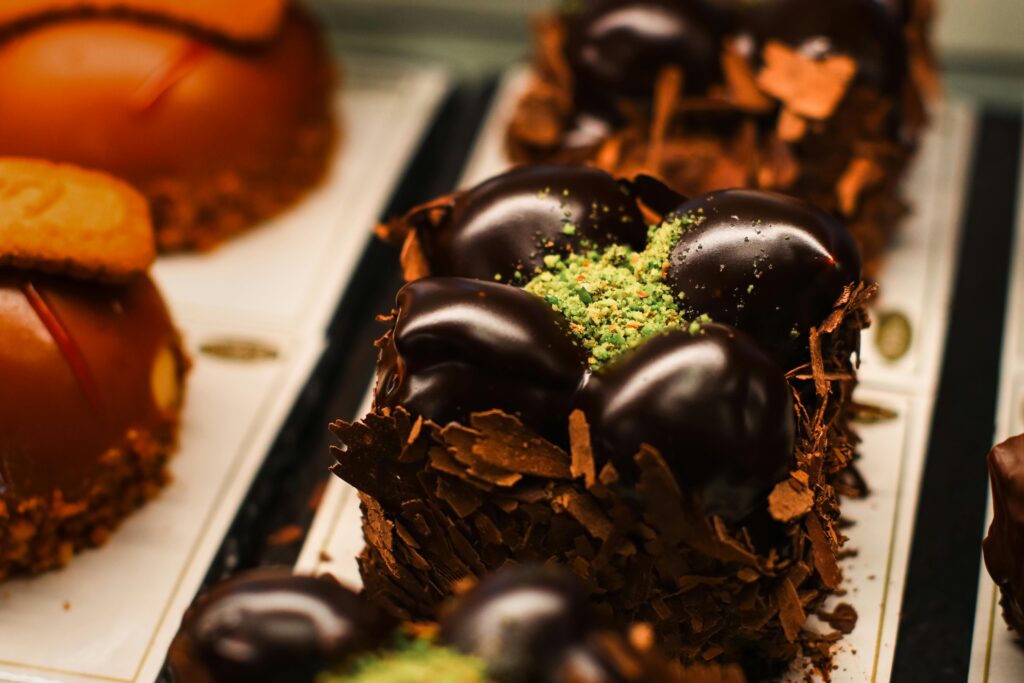
12. What Makes a Patisserie the Best?
The world’s best patisseries share more than talent.
They share discipline, vision, and emotion.
Each one represents a balance of five invisible ingredients:
- Craftsmanship — the invisible hours behind every perfect layer.
- Cultural authenticity — flavors rooted in place and memory.
- Innovation — courage to reinterpret tradition.
- Aesthetics — beauty as part of taste.
- Emotion — the ability to make sweetness feel human, not mechanical.
In a world of instant gratification, these patisseries remind us that true indulgence is slow — built on repetition, patience, and devotion to detail.
13. The Universal Language of Sweetness
From Paris to Tokyo, Vienna to Sydney, these pastry houses form an unspoken network — a global map of artistry and generosity.
Each tells a different story, but all share the same essence: the belief that pleasure, when made with care, becomes timeless.
To enter any of these patisseries is to step into a world where sugar is not excess, but expression.
Where flour becomes architecture. Where chefs become poets.
Because in the end, pastry — like art — is about memory.
And the world’s finest patisseries are not simply places to eat, but to remember.