Discover the world’s most luxurious perfumes — rare creations where art, emotion, and craftsmanship merge into unforgettable olfactory masterpieces.
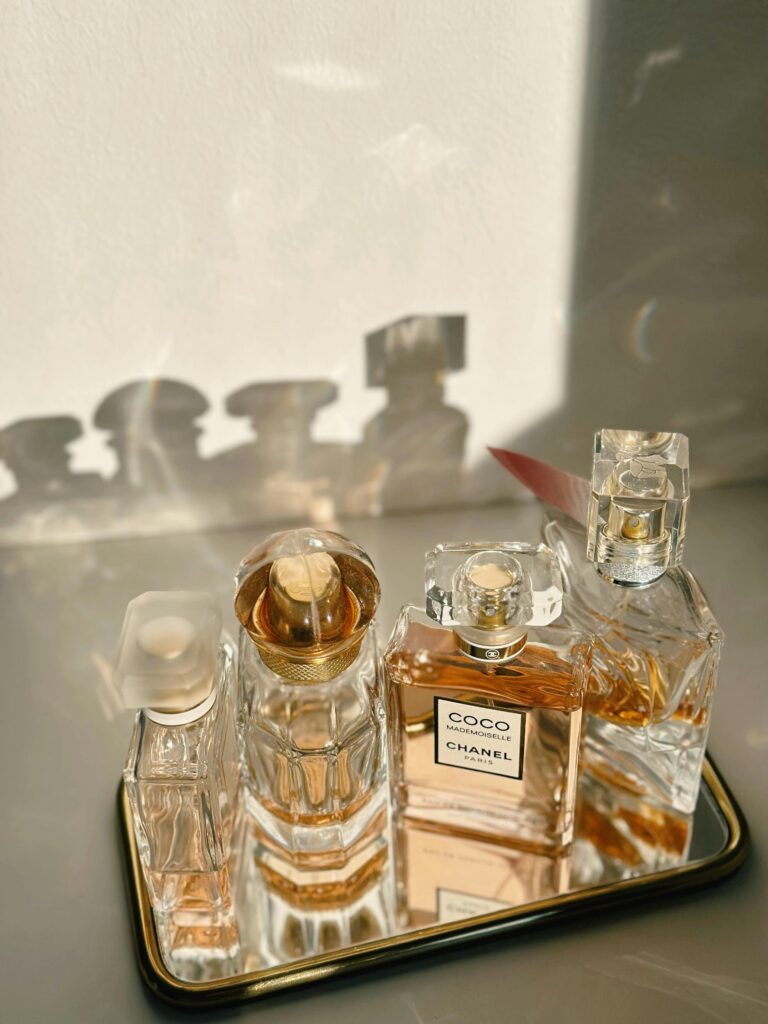
1. The Art of Invisible Luxury
Perfume is the most intimate form of luxury.
It doesn’t show; it whispers. It moves with you — part memory, part mystery.
The world’s most exclusive perfumes are not simply about price or rarity; they are about heritage, artistry, and devotion. Each drop represents thousands of hours of craftsmanship — from harvesting blossoms by hand to blending ingredients aged in silence for decades.
These scents aren’t worn to impress. They’re worn to remember who you are — or who you wish to be.
2. Shumukh — The Crown Jewel of Perfumery
At over $1.2 million, Shumukh remains the world’s most extravagant fragrance — not just for its cost, but for its imagination.
Encased in a towering crystal bottle encrusted with diamonds, pearls, topaz, and 18-karat gold, it is both perfume and sculpture. Inside lies a complex composition of Indian agarwood, sandalwood, Turkish rose, and amber, blended to evoke opulence and devotion.
Each bottle takes months to assemble. Every gemstone is set by hand. And with only one in existence, Shumukh is not just a fragrance — it’s a legend.
3. DKNY Golden Delicious Million Dollar Bottle — Where Jewelry Meets Scent
When jeweler Martin Katz collaborated with DKNY, the result blurred the line between haute joaillerie and haute parfum.
The bottle itself — carved in gold and adorned with 2,909 gemstones, including 2,700 diamonds and a 2.43-carat yellow canary diamond — is an ode to New York’s skyline.
The fragrance inside is just as radiant: a lush mix of apple blossom, white rose, and sandalwood, capturing the warmth and energy of the city it celebrates.
It is perfume as sculpture — a city’s spirit distilled in glass, gold, and light.
4. Clive Christian No. 1 Imperial Majesty — The Aristocrat of Scents
Few names carry as much weight in luxury perfumery as Clive Christian.
His No. 1 Imperial Majesty, priced at nearly $215,000 per bottle, remains one of the most revered compositions in history.
Each crystal flacon, adorned with a five-carat diamond and 24-carat gold collar, holds a symphony of jasmine, vanilla, sandalwood, and bergamot. The scent feels regal — not in excess, but in grace.
To own it is to own a fragment of perfume history; to wear it is to experience quiet magnificence.
5. Baccarat Les Larmes Sacrées de Thèbes — The Sacred Tears
Translated as “The Sacred Tears of Thebes,” this creation by Baccarat is both ancient and futuristic — a pyramid-shaped crystal bottle holding a golden elixir of myrrh, frankincense, and ambergris.
Its scent is spiritual, evocative of Egyptian temples and sacred rituals. Only a handful of bottles were ever made, each signed by the craftsman who shaped it.
It doesn’t merely perfume the skin; it tells the story of civilization itself — a fragrance for collectors who understand silence and power.
6. Chanel Grand Extrait — The Essence of Timelessness
Some luxuries never need to shout.
Chanel Grand Extrait is that kind of perfume — iconic, feminine, and eternal.
With its oversized glass flacon hand-sealed in silk thread, it reimagines Coco Chanel’s 1921 creation, retaining its notes of May rose, jasmine, ylang-ylang, and aldehydes.
Each bottle is crafted like a piece of art, meant not for mass consumption but for inheritance. It embodies the paradox of true luxury: simplicity elevated to the sublime.
7. Hermès 24 Faubourg — The Parisian Sunrise
If Chanel is the scent of memory, Hermès 24 Faubourg is the scent of light.
Created by perfumer Maurice Roucel in 1995, it captures the morning sun hitting the façades of the Hermès flagship store in Paris.
Only 1,000 crystal bottles were ever produced, each filled with a glowing blend of orange blossom, jasmine, vanilla, and iris.
The result is elegant yet elusive — the kind of perfume that lingers in a room after its wearer has left, leaving only warmth behind.
8. Caron Poivre — The Rebel Classic
Born in 1954, Caron Poivre remains one of perfumery’s boldest compositions.
It’s not delicate — it’s defiant. Inside its Baccarat crystal flacon lies a daring blend of red pepper, clove, rose, and jasmine — a fragrance as sharp as it is sensual.
Unlike other luxury scents designed for display, Caron Poivre is meant to be worn. It’s the olfactory equivalent of couture tailored to fit perfectly, reserved for those unafraid to command attention.
It reminds us that true luxury lies in courage — in being unforgettable.
9. Joy by Jean Patou — The Scent of Happiness
When the Great Depression hit, Jean Patou created Joy as an act of optimism — a fragrance so rich it defied despair.
Each bottle requires 10,000 jasmine blossoms and 28 dozen roses, sourced and pressed by hand.
The scent is floral perfection: bright yet grounded, sensual yet serene.
Decades later, Joy remains a cornerstone of perfumery — proof that emotion, not excess, defines beauty.
Luxury fades. Joy endures.
10. JAR Bolt of Lightning — The Perfume That Cannot Be Tamed
Created by reclusive jeweler Joel Arthur Rosenthal (JAR), Bolt of Lightning is as enigmatic as its maker.
The scent captures the charged air after a summer storm — green, electric, and alive. Tuberose, musk, and ozone blend in a composition that feels alive, like the earth breathing after rain.
Each bottle is hand-cut crystal, designed individually — no two are the same.
It’s less perfume than phenomenon — fleeting, magnetic, unforgettable.
11. The Price of Rarity: Why These Perfumes Matter
What makes a perfume worth thousands, even millions?
It’s not marketing. It’s mastery.
- Ingredients: Many of these perfumes use natural extracts harvested once a year or aged for decades — oud from India, ambergris from the sea, rose oil from Grasse.
- Artistry: Each composition is an architecture of scent, where every note — top, heart, and base — unfolds with precision and balance.
- Design: The bottles themselves are objets d’art — carved, blown, or cut by artisans who treat glass as jewelry.
- Emotion: The ultimate value of a perfume lies in its ability to move the soul — to turn memory into something wearable.
These perfumes are not about vanity; they are about transcendence. They turn the invisible into art.
12. The Intersection of Craft and Culture
Luxury perfumery sits at the crossroads of culture, chemistry, and storytelling.
It connects farmers to designers, botanists to glassmakers, and artisans across continents.
A drop of rose oil can hold the labor of hundreds of hands — harvested before dawn, distilled over open flame, and blended by nose alone.
In a sense, these perfumes are cultural symphonies — every note composed from tradition, travel, and time.
To own one is to possess a small piece of that global conversation — a reminder that beauty, like scent, is both fleeting and eternal.
13. The New Face of Luxury: Conscious Craftsmanship
In recent years, the notion of “luxury” has shifted from display to discernment.
Collectors today seek authenticity over extravagance — craftsmanship, sustainability, and provenance.
Some modern perfumers now revisit ancient techniques: enfleurage (extracting scent through fat), natural tinctures, hand-blown glass vessels.
Others collaborate with artists and sculptors, turning fragrance into an immersive sensory experience.
It’s no longer about wearing the rarest scent — but about understanding its journey, its makers, and its meaning.
14. Perfume as Memory, Perfume as Legacy
Perfume is the most personal form of memory.
It marks moments more vividly than photographs: the first love, the last goodbye, the home you once lived in, the city you can still smell in your dreams.
The world’s most luxurious perfumes don’t just decorate the skin — they define eras.
Each bottle carries the weight of time, culture, and emotion. And while few can afford their price tags, their stories belong to everyone who has ever loved a scent enough to close their eyes and remember.
Because in the end, perfume isn’t about cost. It’s about connection — the invisible bond between maker and wearer, moment and eternity.