For many visitors arriving in Turkey, one of the first surprises is learning that Istanbul is not the capital. The city straddling two continents is the country’s cultural and economic epicenter, but not its political heart. That honor belongs to Ankara—a city that, at first glance, might appear quieter, less flamboyant, and far from the sea.
So, why did the founders of modern Turkey choose Ankara, a landlocked city in central Anatolia, over the magnificent imperial capital of Istanbul?
The answer lies not just in history, but in vision. Understanding this decision reveals how a new nation was built—one that redefined identity, geography, and destiny.
From Empire to Republic: Turning the Page of History
To understand Ankara’s rise, we must revisit the final chapters of the Ottoman Empire. For centuries, Istanbul—once Constantinople—was the jewel of empires. From the Byzantine emperors to Ottoman sultans, rulers governed vast territories from the shores of the Bosphorus. It was a city of palaces, mosques, and political intrigue, connecting Europe and Asia through trade and culture.
Yet, by the early 20th century, the empire was faltering. After World War I, the Ottoman capital was occupied by foreign powers, and its government lost legitimacy. Out of this turmoil emerged Mustafa Kemal Atatürk, a soldier, strategist, and visionary who would lead the nation’s struggle for independence.
In 1919, Atatürk began mobilizing resistance from Anatolia’s heartland. Far from the occupied coastal cities, Ankara became a sanctuary of sovereignty—a place from which the Turkish people could rebuild control over their destiny.
Why Atatürk Chose Ankara
When the Republic of Turkey was founded in 1923, Atatürk faced a defining decision: where would the new capital stand?
His choice of Ankara was deliberate, symbolic, and strategic. Several key factors shaped his vision:
- A Blank Canvas for a New Republic
Istanbul carried the weight of empire, tradition, and religious hierarchy. Atatürk’s goal was to create a secular, modern republic free from the Ottoman past. Ankara offered a clean slate—an unburdened landscape from which a new Turkey could rise. - Strategic Location and Security
Situated in the center of Anatolia, Ankara was naturally defensible—far from coastlines vulnerable to invasion. Its position allowed for easier communication and governance across the new nation, from the Black Sea to the Mediterranean. - Symbolism of Renewal
By shifting the capital inland, Atatürk moved the focus away from imperial nostalgia toward the Anatolian heart, where the real struggle for independence had been fought. Ankara symbolized rebirth, equality, and a new national identity that belonged to all citizens, not just an elite class in the former imperial city. - Practicality and Modern Planning
In the 1920s, Ankara was a modest town of fewer than 30,000 people. This made it a perfect testing ground for urban planning and modern architecture. Roads, ministries, schools, and parks were built with a forward-looking blueprint—turning the city into a physical manifestation of Atatürk’s reforms.
The Strategic Genius Behind the Decision
Beyond symbolism, Ankara’s geography provided an undeniable advantage.
Located at the crossroads of Anatolia’s trade routes, the region had long been a hub of communication and commerce—dating back to Hittite and Roman times, when the city was known as Ancyra. Surrounded by plateaus and rolling hills, it stood at a distance from both the Aegean and Eastern borders, giving it a sense of neutrality and security.
This central location allowed Ankara to act as the administrative anchor of a vast and newly unified country. Rail lines connecting the city to Istanbul, Izmir, and the Black Sea transformed it into a logistical hub, while new infrastructure projects brought electricity, water systems, and urban order where once there had been scattered villages.
In short, Ankara’s geography supported the vision of a modern, cohesive republic—a place that could govern from the nation’s heart rather than its periphery.
Building a New Republic from the Anatolian Plateau
Once Ankara was declared the capital, the transformation was immediate and remarkable.
Architects from Germany, Austria, and Switzerland were invited to help design a modern city. The first master plan, drawn by German urbanist Hermann Jansen, envisioned wide boulevards, green spaces, and civic buildings arranged in a rational, Western-style layout.
Atatürk’s reforms soon gave physical form to this vision. Ministries, parliament buildings, embassies, and universities began to rise across the city. Educational institutions like Ankara University symbolized enlightenment and progress. Meanwhile, the Grand National Assembly—founded in 1920—remained the beating heart of Turkey’s democratic experiment.
By the 1930s, Ankara had grown into a confident capital representing the ideals of the Republic: secularism, equality, and modernization.
Ankara Today: A Living Symbol of Modern Turkey
A century later, Ankara remains the administrative and political powerhouse of Turkey. The city is home to all ministries, foreign embassies, and major universities, as well as the Presidential Complex—a contemporary architectural statement of the state’s continuity.
Yet Ankara’s identity is far more than politics. It’s a city of parks, culture, and design—where the pulse of government meets the calm of everyday life. Visitors find a cosmopolitan city surrounded by nature, with forests, lakes, and ancient citadels coexisting with art galleries, jazz bars, and boutique cafes.
- Anıtkabir, the mausoleum of Atatürk, stands as the city’s emotional and architectural centerpiece. Its vast courtyard, flanked by solemn guards and marble lions, is a pilgrimage site for millions each year.
- The Museum of Anatolian Civilizations showcases one of the world’s richest collections of prehistoric and classical artifacts, a reminder that Ankara’s story stretches back 3,000 years.
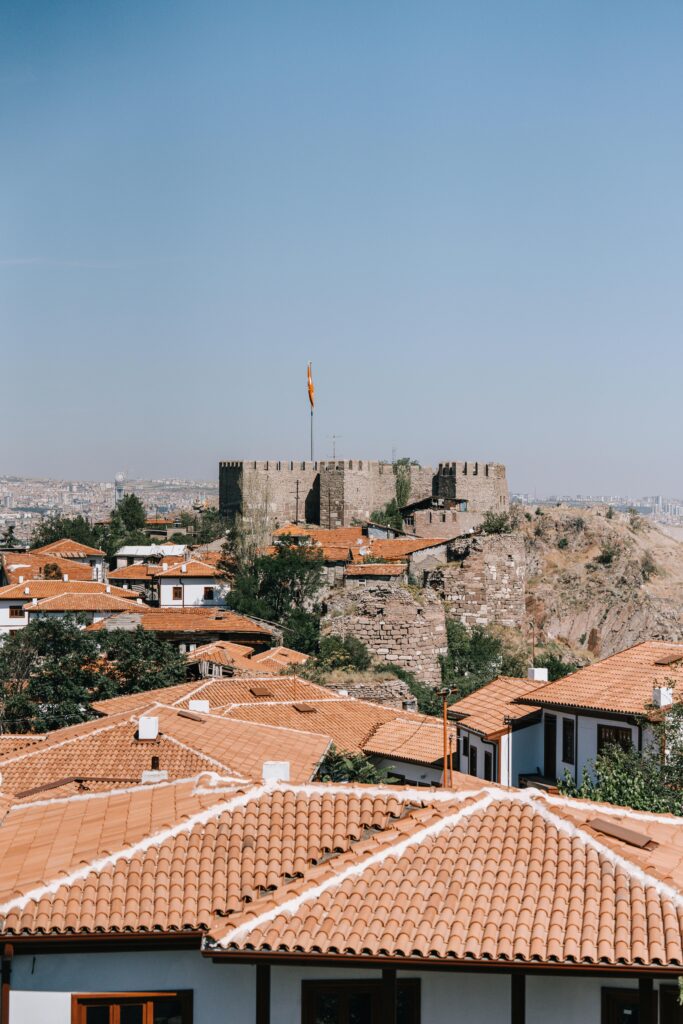
- Kocatepe Mosque, Atakule Tower, and Hamamönü’s restored Ottoman houses illustrate Ankara’s unique fusion of history and modernity.
In recent years, the city has also attracted attention for its growing real estate and business ecosystem—driven by new infrastructure projects, international schools, and a rising professional class.
Istanbul vs. Ankara: Two Souls, One Nation
While Ankara represents discipline, order, and progress, Istanbul embodies beauty, chaos, and diversity. The two cities reflect Turkey’s dual identity—one grounded in heritage, the other in reform.
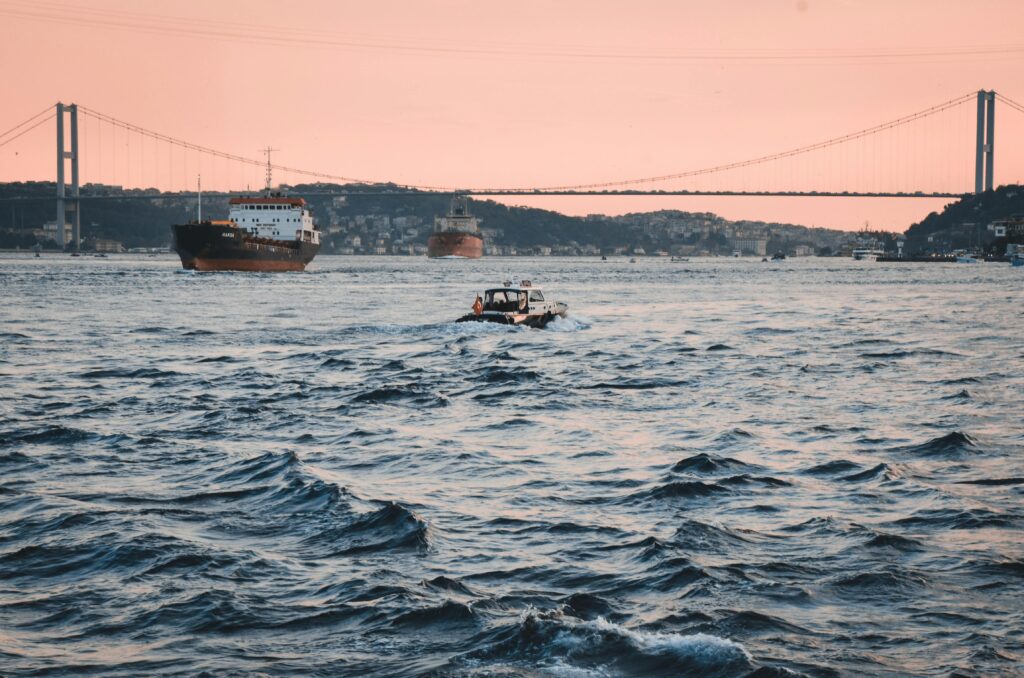
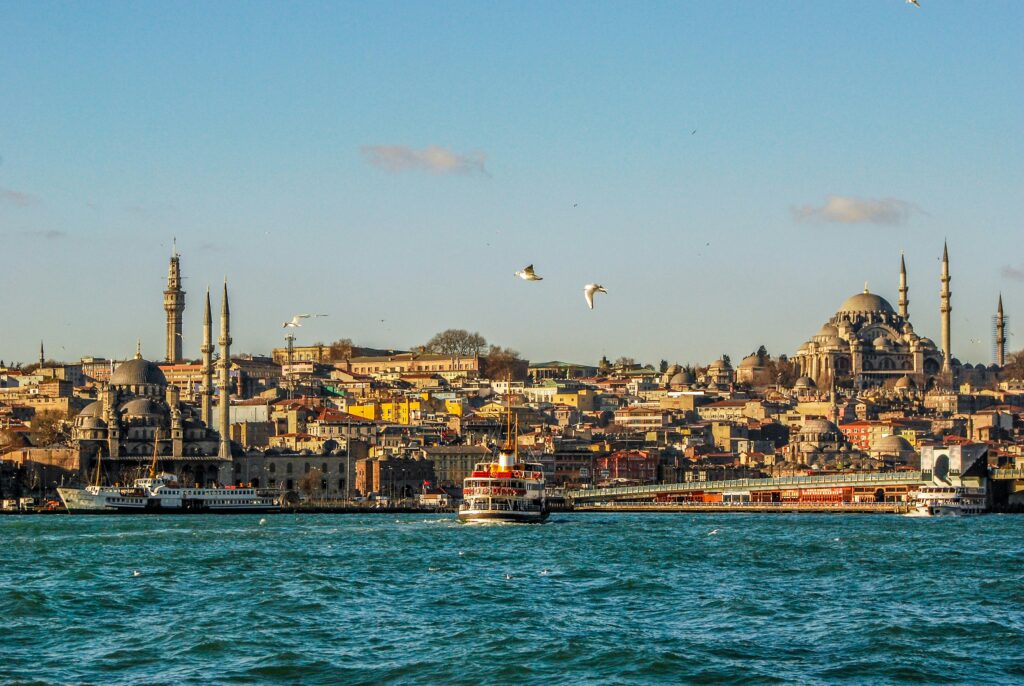
- Istanbul, with its shimmering Bosphorus, Byzantine domes, and Ottoman palaces, continues to captivate the world. It is Turkey’s economic and cultural capital, where art, finance, and global trade converge.
- Ankara, by contrast, is deliberate and pragmatic—a place where decisions are made, not merely admired.
This balance between the two cities sustains Turkey’s energy: Istanbul inspires, Ankara stabilizes. The dialogue between past and future continues to define the nation’s trajectory.
Atatürk’s Legacy and the Spirit of Anıtkabir
Every corner of Ankara echoes Atatürk’s enduring presence. His mausoleum, Anıtkabir, is not merely a monument but a national compass.
Constructed between 1944 and 1953, it blends neoclassical design with Anatolian motifs—symbolizing unity between modernity and heritage. Visitors approach through the “Road of Lions,” leading to a grand courtyard that opens toward the tomb chamber. The atmosphere is solemn yet empowering, reminding every Turk of the ideals on which the Republic was built.
Anıtkabir is more than a resting place; it’s a living classroom of national identity. School groups, diplomats, and foreign leaders walk its marble halls, paying respect to a leader who believed that education, science, and reason—not empire—were the foundations of strength.
Why Investors and Expats Are Looking at Ankara Again
In recent years, Ankara’s real estate landscape has evolved rapidly. While Istanbul remains the magnet for luxury and international attention, Ankara offers stability, affordability, and infrastructure that appeal to both Turkish citizens and foreign investors.
For high-net-worth individuals seeking residency or citizenship through investment, the capital city presents unique advantages:
- Value for money: Property prices per square meter are significantly lower than Istanbul’s, allowing investors to secure larger, high-quality residences within city limits.
- Political and educational center: Proximity to ministries, embassies, and leading universities makes Ankara an ideal base for professionals and diplomatic families.
- Urban development and sustainability: Districts such as Çankaya and Yenimahalle are undergoing modern regeneration projects focused on green living, transportation, and smart urban design.
EVTurkey.com, the digital publication under EVBodrum, covers these trends extensively—providing insights into how Ankara is positioning itself as a model for Turkey’s future urban evolution. From detailed area guides to lifestyle reports, the platform showcases not only investment potential but also the rhythm of daily life in the capital: morning walks in Kuğulu Park, gallery openings in Kavaklıdere, and coffee on the terraces overlooking Atakule.
For those considering property in Ankara, EVBodrum’s curated listings highlight villas, apartments, and investment opportunities across prime neighborhoods—combining local expertise with international trust.
A Tale of Two Capitals: The Istanbul–Ankara Balance
Turkey’s dual-capital dynamic—economic power in Istanbul, political power in Ankara—remains one of the country’s great strengths. It disperses opportunity across regions and preserves cultural balance.
Ankara’s calm contrasts beautifully with Istanbul’s intensity. The former represents governance, rationality, and national unity; the latter, creativity, diversity, and global connection.
Together, they embody the spirit of a country that is both deeply historical and relentlessly modern.
Conclusion: The City That Defines a Nation’s Vision
Choosing Ankara over Istanbul was not a rejection of history—it was an act of creation.
In 1923, Mustafa Kemal Atatürk did more than relocate a capital; he redrew the emotional map of a nation. By anchoring Turkey’s heart in the Anatolian plateau, he placed faith in the future rather than nostalgia for the past.
Today, Ankara continues to represent that courage—to innovate, to reform, and to hold firm to principles amid change. From the quiet dignity of Anıtkabir to the bustling cafés of Kızılay, every corner of the city tells the story of a country that transformed itself from empire to republic, from tradition to progress.
And so, while Istanbul dazzles with its timeless skyline, it is in Ankara where Turkey’s pulse truly beats—steady, strategic, and forward-looking.
Learn More with EVTurkey.com
Explore the history, lifestyle, and investment landscape shaping modern Turkey.
At EVTurkey.com, discover in-depth guides on Turkish cities, property trends, and cultural insights curated by the EVBodrum team—your trusted source for premium real estate and informed living across Turkey’s most extraordinary destinations.