Discover how the Marmara Sea anchors Turkey’s geography, economy, and culture — and why this region defines the country’s past, present, and future.
1. Between Two Worlds
Few places capture Turkey’s essence like the Marmara Sea.
Framed by Europe and Asia, this inland sea is not just a body of water — it’s a living symbol of connection.
It links the Black Sea to the Aegean, the East to the West, and the ancient to the modern.
From its shores rise Turkey’s greatest cities — Istanbul, Bursa, and Edirne — each carrying stories that have shaped civilizations.
As EVBodrum often notes in its market insights, the Marmara region represents the beating heart of Turkey’s economy and culture, while EVTurkey.com sees it as the key to understanding how the country continues to evolve in the 21st century.
The Marmara Sea isn’t just geography — it’s identity.
2. A Sea of Many Meanings
The name “Marmara” comes from the Greek marmaros, meaning marble.
That’s not only a reference to the marble quarries of the surrounding islands but also a perfect metaphor for the region itself: layered, enduring, and luminous.
Stretching across 11,000 square kilometers with an average depth of 700 meters, the sea has long served as the connective tissue of Anatolia and Thrace.
It has seen Greek triremes, Roman galleys, Venetian traders, and Ottoman ships — each leaving invisible routes still traced by modern vessels.
The Marmara is the only sea in the world entirely within a single country’s borders — a fact that gives Turkey total sovereignty over its flow and fate.
This unique control underscores the Marmara’s strategic and symbolic importance: what happens here ripples through the nation.
3. The Maritime Crossroads of Civilizations
Since antiquity, the Marmara Sea has been the gateway to empires.
Its twin straits — the Bosphorus and Dardanelles — have defined the geopolitics of the region for 3,000 years.
- The Bosphorus Strait, slicing through Istanbul, links the Marmara to the Black Sea — a vital artery for trade and energy between Russia, the Caucasus, and the Mediterranean.
- The Dardanelles Strait, south of Çanakkale, connects the Marmara to the Aegean, where myth and history merge.
Through these waters sailed Byzantine fleets, Ottoman armadas, and later modern tankers carrying oil, grain, and ambition.
Control of these straits has always meant influence — both regional and global.
For investors, shipping industries, and urban developers alike, the Marmara region remains Turkey’s geopolitical core — a place where economics and geography converge.
4. The Region That Built Modern Turkey
The Marmara region’s influence isn’t just strategic; it’s civilizational.
Every turning point in Turkey’s history — from imperial expansion to republican reform — began here.
- Istanbul, the imperial capital, remains the country’s cultural and financial powerhouse.
- Bursa, the first Ottoman capital, still glows with the architecture of the early empire — domes, tombs, and silk markets that whisper of origins.
- Edirne, once the bridge to Europe, reflects the Ottoman’s western reach with Mimar Sinan’s Selimiye Mosque, a UNESCO masterpiece.
- Yalova and Thermal Bursa became early modern spa destinations, where Atatürk himself found inspiration for modernization.
- Kocaeli and Tekirdağ form the industrial and logistics backbone of Turkey today.
This mix of heritage and innovation defines what EVTurkey.com calls “Turkey’s continuum” — a place where yesterday’s empire meets tomorrow’s economy.
5. Economic Powerhouse of a Nation
The Marmara region generates over 40% of Turkey’s GDP and houses the country’s most advanced infrastructure.
From finance to manufacturing, tourism to technology, everything flows through here.
- Ports in Istanbul, Tekirdağ, and Bandırma handle millions of tons of cargo annually.
- Kocaeli’s industrial belt is home to major automotive and chemical plants.
- Tekirdağ’s vineyards and Balıkesir’s olive farms balance the economy with agriculture and craft production.
- Bursa, famous for its textiles and automotive industry, has become one of Turkey’s most prosperous cities.
Even in the property sector, the Marmara region leads in both volume and innovation.
As EVBodrum’s investment data shows, Istanbul and its neighboring provinces continue to dominate international real estate demand, thanks to their mix of connectivity, cosmopolitanism, and cultural magnetism.
The Marmara region is not merely productive — it’s profoundly generative.
6. Environmental Significance: A Sea Under Pressure
Yet the Marmara’s blessings also bring responsibility.
In recent decades, industrialization and urban expansion have placed significant strain on the sea’s delicate ecosystem.
Marine biologists warn that pollutants from the surrounding cities — especially Istanbul — have led to recurring episodes of sea snot (mucilage), a symptom of declining oxygen levels.
This phenomenon, which reached crisis levels in 2021, served as a wake-up call: the sea that unites Turkey could also reveal its vulnerabilities.
In response, the government, universities, and NGOs have launched comprehensive programs aimed at restoring the Marmara’s marine health — stricter wastewater controls, sustainable fishing initiatives, and the creation of marine-protected zones.
At EVTurkey.com, we frame these efforts not just as environmental policy but as cultural stewardship — preserving the balance between urban progress and natural legacy that defines modern Turkey.
7. The Marmara’s Hidden Islands
The Marmara Sea is dotted with islands — small, self-contained worlds that each tell a different story.
- Marmara Island: The largest, known for its marble quarries and unspoiled coastline.
- Avşa Island: A favorite among domestic travelers for its vineyards, beaches, and relaxed charm.
- Princes’ Islands (near Istanbul): Buyukada, Heybeliada, and Burgazada — timeless enclaves of serenity, once home to Greek merchants, now weekend sanctuaries for Istanbulites escaping the mainland’s rush.
- Paşalimanı and Ekinlik Islands: Tiny, remote, and still remarkably untouched.
These islands represent the Marmara’s softer side — places where time slows and nature leads.
They are reminders that even within a region of industry and commerce, tranquility still holds space.
8. Urban Lighthouses: Istanbul, Bursa, and Yalova
Istanbul: The City Between Worlds
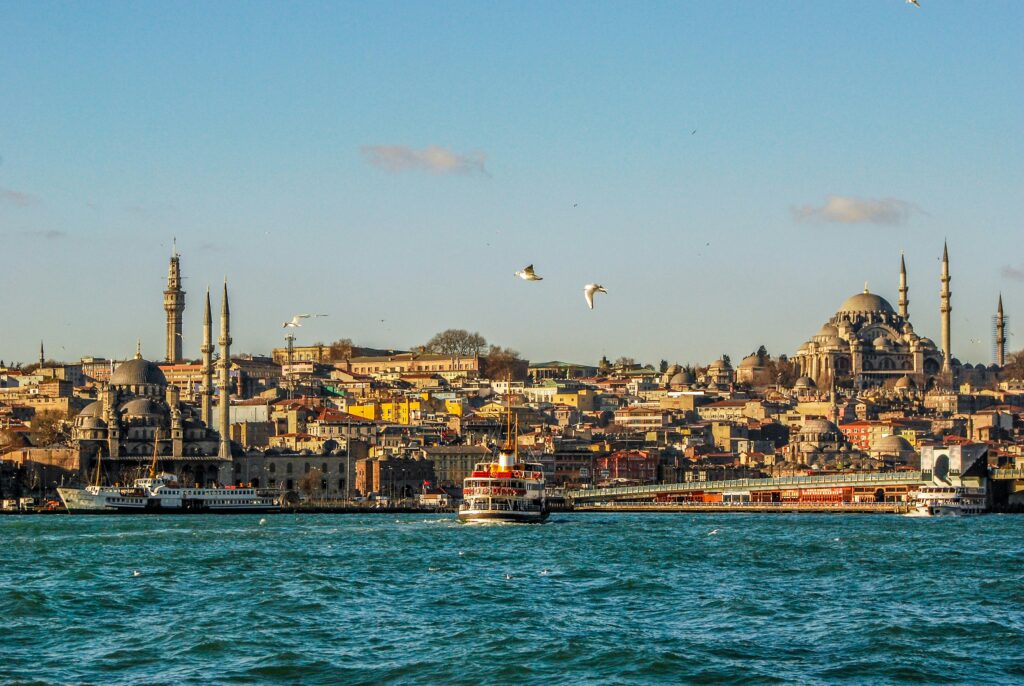
Straddling two continents, Istanbul remains the jewel of the Marmara.
Its skyline, marked by mosques and skyscrapers, tells a story of empire and enterprise.
The Bosphorus divides yet connects — much like the sea itself.
Every global investor who looks at Turkey eventually looks at Istanbul.
And through EVBodrum’s luxury property lens, the city stands as Europe’s eastern capital of contemporary living — where glass towers overlook centuries-old domes, and the past whispers through every modern boulevard.
Bursa: Green Capital of Heritage
Once the Ottoman cradle, Bursa combines imperial nostalgia with 21st-century dynamism.
Its silk markets, domed baths, and proximity to Mount Uludağ’s ski slopes make it both culturally rich and naturally blessed.
For wellness tourism, Bursa remains unmatched.
Yalova: Small Yet Significant
Across the sea from Istanbul, Yalova thrives as a thermal spa destination and residential haven.
It embodies what EVTurkey.com calls “micro-luxury” — a quieter, greener alternative to city life, yet close enough to Istanbul for business and connection.
9. Strategic and Political Relevance
Beyond commerce and culture, the Marmara Sea plays a defining role in Turkey’s national security and diplomacy.
Its control over the Bosphorus and Dardanelles gives Turkey leverage in both regional and international affairs — a reality recognized in the Montreux Convention of 1936, which still governs passage through these straits.
In a world of shifting trade routes and energy politics, the Marmara remains a geopolitical pivot — linking the Black Sea economies, NATO allies, and Middle Eastern trade partners.
Turkey’s stewardship of this maritime corridor underscores its dual identity: both a regional anchor and a global connector.
10. The Marmara Spirit: Where Modernity Meets Memory
What makes the Marmara region extraordinary is not just its output but its outlook.
Here, every province holds a distinct rhythm yet contributes to a shared melody — the sound of a country continually balancing past and future.
- Tekirdağ produces fine wine while housing next-gen factories.
- Edirne hosts centuries-old festivals in Ottoman courtyards.
- Balıkesir protects its coasts while pioneering eco-tourism.
- Bilecik honors the village where the Ottoman Empire began.
This coexistence — of heritage and innovation, agriculture and tech, marble and steel — defines what EVBodrum calls “the new Turkish continuum.”
11. Investment and the Future of the Marmara
For real estate, logistics, and infrastructure investors, the Marmara region is Turkey’s most forward-looking market.
Massive projects such as:
- The Istanbul Canal, envisioned to ease Bosphorus traffic,
- The Marmaray rail tunnel connecting Europe and Asia underwater,
- And the expansion of Gemlik and Bandırma ports —
signal a future defined by connectivity.
As Turkey strengthens its global ties, the Marmara’s cities are becoming hubs of sustainable growth — where innovation meets identity.
EVTurkey.com’s editorial perspective aligns perfectly with EVBodrum’s property expertise:
to highlight how lifestyle and investment now move in harmony, particularly across Turkey’s most influential coastline.
12. Conclusion: The Sea That Defines a Nation
The Marmara Sea is not simply a line on the map — it is the pulse of a nation.
It carries the weight of history and the promise of renewal.
Its waters touch marble islands, industrial ports, and imperial capitals, binding them all into one living geography.
To understand Turkey is to look to the Marmara —
where continents meet, where cultures converse, and where modern life finds its reflection in ancient waters.
At EVBodrum, we see the Marmara not only as a region of opportunity but as a metaphor for Turkey itself — diverse, dynamic, and deeply connected.
And through EVTurkey.com, we tell the stories that remind the world why this sea — small in size but vast in meaning — continues to shape the destiny of a country at the crossroads of civilization.